Poetry logo

Poem of the day

Categories

Poetry Hubs

Simple Poetry's mission is to bring the beauty of poetry to everyone, creating a platform where poets can thrive.

Copyright Simple Poetry © 2026 • All Rights Reserved • Made with ♥ by Baptiste Faure.

Shortcuts

  • Poem of the day
  • Categories
  • Search Poetry
  • Contact

Ressources

  • Request a Poem
  • Submit a Poem
  • Help Center (FAQ)
  • Privacy Policy
  • Terms of Service
Browse poems by categories

Poems about Love

Poems about Life

Poems about Nature

Poems about Death

Poems about Friendship

Poems about Inspirational

Poems about Heartbreak

Poems about Sadness

Poems about Family

Poems about Hope

Poems about Happiness

Poems about Loss

Poems about War

Poems about Dreams

Poems about Spirituality

Poems about Courage

Poems about Freedom

Poems about Identity

Poems about Betrayal

Poems about Loneliness

Poetry around the world

Barcelona Poetry Events

Berlin Poetry Events

Buenos Aires Poetry Events

Cape Town Poetry Events

Dublin Poetry Events

Edinburgh Poetry Events

Istanbul Poetry Events

London Poetry Events

Melbourne Poetry Events

Mexico City Poetry Events

Mumbai Poetry Events

New York City Poetry Events

Paris Poetry Events

Prague Poetry Events

Rome Poetry Events

San Francisco Poetry Events

Sydney Poetry Events

Tokyo Poetry Events

Toronto Poetry Events

Vancouver Poetry Events

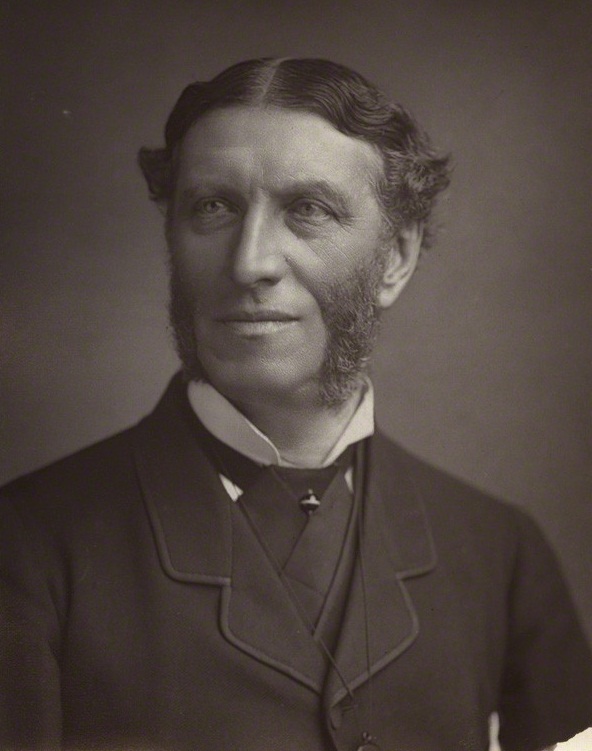
Matthew Arnold

Matthew Arnold was an English poet and cultural critic who worked as an inspector of schools. He is best remembered for his poetry, including works like 'Dover Beach,' and his influence on literary and social criticism. Arnold's work often grappled with the social issues and the loss of faith in the modern age, making him a central figure in the transition from Romanticism to Modernism in literature.

December 24, 1822

April 15, 1888

English

Matthew Arnold

Page 2 of 8

Previous

Next

Page 2 of 8

Calais Sands

A thousand knights have rein’d their steeds
To watch this line of sand-hills run,
Along the never silent Strait,
To Calais glittering in the sun:

To look toward Ardres’ Golden Field
Across this wide aërial plain,
Which glows as if the Middle Age
Were gorgeous upon earth again.

Oh, that to share this famous scene
I saw, upon the open sand,
Thy lovely presence at my side,
Thy shawl, thy look, thy smile, thy hand!

How exquisite thy voice would come,
My darling, on this lonely air!
How sweetly would the fresh sea-breeze
Shake loose some lock of soft brown hair!

But now my glance but once hath roved
O’er Calais and its famous plain;
To England’s cliffs my gaze is turn’d,
O’er the blue Strait mine eyes I strain.

Thou...

Matthew Arnold

Consolation

Mist clogs the sunshine.
Smoky dwarf houses
Hem me round everywhere;
A vague dejection
Weighs down my soul.
Yet, while I languish,
Everywhere countless
Prospects unroll themselves,
And countless beings
Pass countless moods.
Far hence, in Asia,
On the smooth convent-roofs,
On the gilt terraces,
Of holy Lassa,
Bright shines the sun.
Grey time-worn marbles
Hold the pure Muses;
In their cool gallery,
By yellow Tiber,
They still look fair.
Strange unloved uproar
Shrills round their portal;
Yet not on Helicon
Kept they more cloudless
Their noble calm.
Through sun-proof alleys
In a lone, sand-hemm'd
City of Africa,
A blind, led beggar,
Age-bow'd, asks alms.
No bolder robber
Erst abode ambush'd...

Matthew Arnold

Courage

True, we must tame our rebel will:
True, we must bow to Nature’s law:
Must bear in silence many an ill;
Must learn to wait, renounce, withdraw.

Yet now, when boldest wills give place,
When Fate and Circumstance are strong,
And in their rush the human race
Are swept, like huddling sheep, along;

Those sterner spirits let me prize,
Who, though the tendence of the whole
They less than us might recognize,
Kept, more than us, their strength of soul.

Yes, be the second Cato prais’d!
Not that he took the course to die
But that, when ’gainst himself he rais’d
His arm, he rais’d it dauntlessly.

And, Byron! let us dare admire,
If not thy fierce and turbid song,
Yet that, in anguish, doubt, desire,
Thy fiery courage still was strong....

Matthew Arnold

Cromwell

SYNOPSIS

Introduction - The mountains and the sea the cradles of Freedom contrasted with the birth-place of Cromwell His childhood and youth The germs of his future character probably formed during his life of inaction Cromwell at the moment of his intended embarkation Retrospect of his past life and profligate youth Temptations held out by the prospect of a life of rest in America How far such rest was allowable Vision of his future life Different persons represented in it Charles the First Cromwell himself His victories and maritime glory Pym Strafford Laud Hampden Falkland Milton Charles the First Cromwell on his death-bed His character Dispersion of the vision Conclusion.

Schrecklich ist es, deiner Wahrheit
Sterbliches Gefäss zu seyn.
- V Schiller,


High fate is theirs, ye sleeple...

Matthew Arnold

Desire

Thou, who dost dwell alone;
Thou, who dost know thine own;
Thou, to whom all are known,
From the cradle to the grave,
Save, O, save!

From the world's temptations;
From tribulations;
From that fierce anguish
Wherein we languish;
From that torpor deep
Wherein we lie asleep,
Heavy as death, cold as the grave,
Save, O, save!

When the soul, growing clearer,
Sees God no nearer;
When the soul, mounting higher,
To God comes no nigher;
But the arch-fiend Pride
Mounts at her side,
Foiling her high emprize,
Sealing her eagle eyes,
And, when she fain would soar,
Make idols to adore;
Changing the pure emotion
Of her high devotion,
To a skin-deep sense
Of her own eloquence;
Strong to deceive, strong to ensla...

Matthew Arnold

Despondency

The thoughts that rain their steady glow
Like stars on life’s cold sea,
Which others know, or say they know
They never shone for me.

Thoughts light, like gleams, my spirit’s sky,
But they will not remain.
They light me once, they hurry by,
And never come again.

Matthew Arnold

Destiny

Why each is striving, from of old,
To love more deeply than he can?
Still would be true, yet still grows cold?
Ask of the Powers that sport with man!

They yok’d in him, for endless strife,
A heart of ice, a soul of fire;
And hurl’d him on the Field of Life,
An aimless unallay’d Desire.

Matthew Arnold

Dover Beach

The sea is calm tonight.
The tide is full, the moon lies fair
Upon the straits; on the French coast, the light
Gleams and is gone; the cliffs of England stand,
Glimmering and vast, out in the tranquil bay.
Come to the window, sweet is the night-air!
Only, from the long line of spray
Where the sea meets the moon-blanched land,

Listen! you hear the grating roar
Of pebbles which the waves draw back, and fling,
At their return, up the high strand,
Begin, and cease, and then again begin,
With tremulous cadence slow, and bring
The eternal note of sadness in.

Sophocles long ago
Heard it on the Aegean, and it brought
Into his mind the turbid ebb and flow
Of human misery; we
Find also in the sound a thought,
Hearing it by this distant norther...

Matthew Arnold

Early Death And Fame

For him who must see many years,
I praise the life which slips away
Out of the light and mutely; which avoids
Fame, and her less fair followers, envy, strife,
Stupid detraction, jealousy, cabal,
Insincere praises; which descends
The quiet mossy track to age.

But, when immature death
Beckons too early the guest
From the half-tried banquet of life,
Young, in the bloom of his days;
Leaves no leisure to press,
Slow and surely, the sweets
Of a tranquil life in the shade;
Fuller for him be the hours!
Give him emotion, though pain!
Let him live, let him feel: I have lived!
Heap up his moments with life,
Triple his pulses with fame!

Matthew Arnold

East And West

In the bare midst of Anglesey they show
Two springs which close by one another play,
And, ‘Thirteen hundred years agone,’ they say,
‘Two saints met often where those waters flow.

‘One came from Penmon, westward, and a glow
‘Whiten’d his face from the sun’s fronting ray.
‘Eastward the other, from the dying day;
‘And he with unsunn’d face did always go.’

Seiriol the Bright, Kybi the Dark, men said.
The Seër from the East was then in light,
The Seër from the West was then in shade.

Ah! now ’tis changed. In conquering sunshine bright
The man of the bold West now comes array’d;
He of the mystic East is touch’d with night.

Matthew Arnold

East London

’Twas August, and the fierce sun overhead
Smote on the squalid streets of Bethnal Green,
And the pale weaver, through his windows seen
In Spitalfields, looked thrice dispirited.
I met a preacher there I knew, and said:
“Ill and o’erworked, how fare you in this scene?”,
“Bravely!” said he; “for I of late have been
Much cheered with thoughts of Christ, the living bread.”
O human soul! as long as thou canst so
Set up a mark of everlasting light,
Above the howling senses’ ebb and flow,
To cheer thee, and to right thee if thou roam,
Not with lost toil thou labourest through the night!
Thou mak’st the heaven thou hop’st indeed thy home.

Matthew Arnold

Epilogue To Lessing’s Laocoön

One Morn as through Hyde Park we walk’d.
My friend and I, by chance we talk’d
Of Lessing’s famed Laocoön;
And after we awhile had gone
In Lessing’s track, and tried to see
What painting is, what poetry,
Diverging to another thought,
‘Ah,’ cries my friend, ‘but who hath taught
Why music and the other arts
Oftener perform aright their parts
Than poetry? why she, than they,
Fewer real successes can display?

‘For ’tis so, surely! Even in Greece
Where best the poet framed his piece,
Even in that Phoebus-guarded ground
Pausanias on his travels found
Good poems, if he look’d, more rare
(Though many) than good statues were,
For these, in truth, were everywhere!
Of bards full many a stroke divine
In Dante’s, Petrarch’s, Tasso’s line,
The ...

Matthew Arnold

Excuse

I too have suffer’d: yet I know
She is not cold, though she seems so:
She is not cold, she is not light;
But our ignoble souls lack might.

She smiles and smiles, and will not sigh,
While we for hopeless passion die;
Yet she could love, those eyes declare,
Were but men nobler than they are.

Eagerly once her gracious ken
Was turn’d upon the sons of men.
But light the serious visage grew,
She look’d, and smiled, and saw them through.

Our petty souls, our strutting wits,
Our labour’d puny passion-fits,
Ah, may she scorn them still, till we
Scorn them as bitterly as she!

Yet oh, that Fate would let her see
One of some worthier race than we;
One for whose sake she once might prove
How deeply she who scorns can love.

...

Matthew Arnold

Faded Leaves

I

THE RIVER

Still glides the stream, slow drops the boat
Under the rustling poplars’ shade;
Silent the swans beside us float
None speaks, none heeds, ah, turn thy head.

Let those arch eyes now softly shine,
That mocking mouth grow sweetly bland:
Ah, let them rest, those eyes, on mine;
On mine let rest that lovely hand.

My pent-up tears oppress my brain,
My heart is swoln with love unsaid:
Ah, let me weep, and tell my pain,
And on thy shoulder rest my head.

Before I die, before the soul,
Which now is mine, must re-attain
Immunity from my control,
And wander round the world again:

Before this teas’d o’erlabour’d heart
For ever leaves its vain employ,
Dead to its deep habitual smart,
And dead to hopes o...

Matthew Arnold

Fragment Of An ‘Antigone’

THE CHORUS

Well hath he done who hath seiz’d happiness.
For little do the all-containing Hours,
Though opulent, freely give.
Who, weighing that life well
Fortune presents unpray’d,
Declines her ministry, and carves his own:
And, justice not infring’d,
Makes his own welfare his unswerv’d-from law.

He does well too, who keeps that clue the mild
Birth-Goddess and the austere Fates first gave.
For from the clay when these
Bring him, a weeping child,
First to the light, and mark
A country for him, kinsfolk, and a home,
Unguided he remains,
Till the Fates come again, alone, with death.

In little companies,
And, our own place once left,
Ignorant where to stand, or whom to avoid,
By city and household group’d, we live: and many sh...

Matthew Arnold

Fragment Of Chorus Of A Dejaneira

O frivolous mind of man,
Light ignorance, and hurrying, unsure thoughts,
Though man bewails you not,
How I bewail you!

Little in your prosperity
Do you seek counsel of the Gods.
Proud, ignorant, self-adored, you live alone.
In profound silence stern
Among their savage gorges and cold springs
Unvisited remain
The great oracular shrines.

Thither in your adversity
Do you betake yourselves for light,
But strangely misinterpret all you hear.
For you will not put on
New hearts with the inquirer’s holy robe,
And purged, considerate minds.

And him on whom, at the end
Of toil and dolour untold,
The Gods have said that repose
At last shall descend undisturb’d,
Him you expect to behold
In an easy old age, in a happy home;

Matthew Arnold

From The Hymn Of Empedocles

Is it so small a thing
To have enjoy'd the sun,
To have lived light in the spring,
To have loved, to have thought, to have done;
To have advanced true friends, and beat down baffling foes;

That we must feign a bliss
Of doubtful future date,
And while we dream on this
Lose all our present state,
And relegate to worlds yet distant our repose?

Not much, I know, you prize
What pleasures may be had,
Who look on life with eyes
Estranged, like mine, and sad:
And yet the village churl feels the truth more than you;

Who 's loth to leave this life
Which to him little yields:
His hard-task'd sunburnt wife,
His often-labour'd fields;
The boors with whom he talk'd, the country spots he knew.

But thou, because thou hear'st
Me...

Matthew Arnold

Growing Old

What is it to grow old?
Is it to lose the glory of the form,
The lustre of the eye?
Is it for beauty to forego her wreath?
Yes, but not for this alone.

Is it to feel our strength,
Not our bloom only, but our strength, decay?
Is it to feel each limb
Grow stiffer, every function less exact,
Each nerve more weakly strung?

Yes, this, and more! but not,
Ah, 'tis not what in youth we dreamed 'twould be!
'Tis not to have our life
Mellowed and softened as with sunset-glow,
A golden day's decline!

'Tis not to see the world
As from a height, with rapt prophetic eyes,
And heart profoundly stirred;
And weep, and feel the fulness of the past,
The years that are no more!

It is to spend long days
And not once feel that we were...

Matthew Arnold

Page 2 of 8

Previous

Next

Page 2 of 8